 by
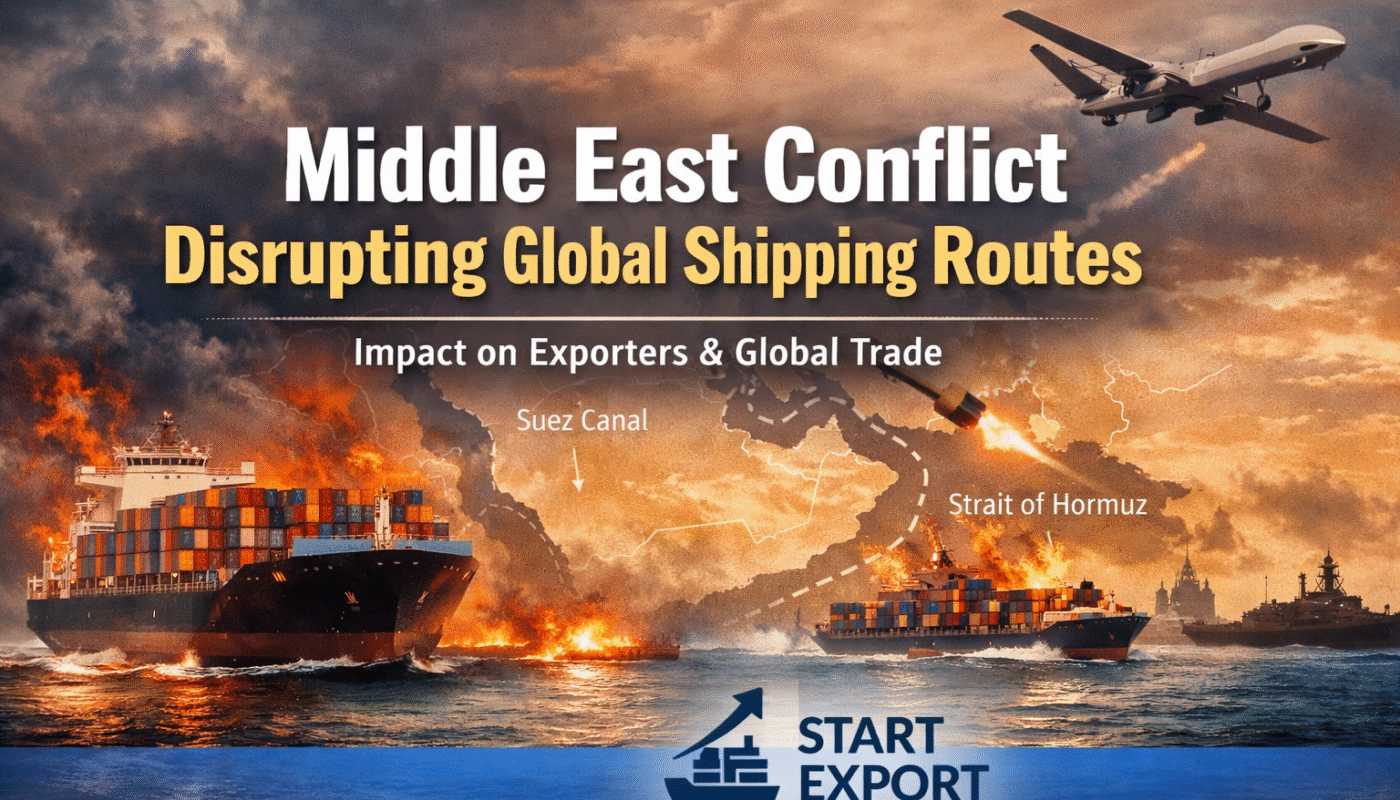
by The escalating Middle East conflict is disrupting global shipping routes, including the Red Sea and Suez Canal. Learn how it affects exporters, freight costs, and global supply chains.
- The escalating Middle East conflict is disrupting global shipping routes, including the Red Sea and Suez Canal. Learn how it affects exporters, freight costs, and global supply chains.
- Why the Middle East Is Critical for Global Shipping
- Shipping Companies Are Rerouting Vessels
- Freight Costs Are Rising Worldwide
- Impact on Global Supply Chains
- How Exporters Are Being Affected
- Impact on Indian Exporters
- How Exporters Can Adapt to Shipping Disruptions
- Could the Cape Route Become the New Normal?
- The Future of Global Shipping
- Conclusion
Global trade depends heavily on safe and predictable shipping routes. However, the escalating conflict in the Middle East has created serious disruptions in maritime logistics, threatening supply chains, increasing freight costs, and forcing shipping companies to rethink their global routes.
For exporters, importers, and logistics professionals, understanding these disruptions is essential. The conflict has already affected critical maritime chokepoints such as the Red Sea, the Suez Canal, and the Strait of Hormuz, which together carry a significant portion of the world’s trade and energy supply.
This article explains how the Middle East conflict is disrupting global shipping routes, what it means for international trade, and how exporters can adapt.
Why the Middle East Is Critical for Global Shipping
The Middle East sits at the center of several major maritime trade corridors connecting Asia, Europe, and Africa.
The most important shipping routes include:
1. Suez Canal (Egypt)
The Suez Canal is one of the world’s most important shipping corridors connecting the Mediterranean Sea with the Red Sea. Around 15–30% of global maritime trade passes through this canal, making it a vital route for goods moving between Asia and Europe.
2. Bab-el-Mandeb Strait (Red Sea entrance)
This narrow strait links the Red Sea to the Gulf of Aden and is essential for vessels heading to the Suez Canal.
3. Strait of Hormuz
This passage connects the Persian Gulf with the Arabian Sea and carries nearly 20% of the world’s oil shipments.
Any disruption in these regions instantly impacts global supply chains.
Recent hostilities between Iran, the United States, and Israel have significantly escalated maritime risks in the region. Attacks on commercial vessels, drones targeting oil tankers, and threats to block critical waterways have created instability across major shipping lanes.
For example:
- Several cargo ships and oil tankers have been attacked in the Strait of Hormuz.
- Naval drones have targeted oil vessels in the Gulf region.
- Shipping traffic has slowed dramatically as companies avoid high-risk areas.
The United Nations has warned that the conflict is already disrupting global markets and supply chains by affecting maritime trade routes and airspace in the region.
Shipping Companies Are Rerouting Vessels
Due to security threats, major shipping companies such as Maersk, Hapag-Lloyd, and CMA CGM have rerouted vessels away from the Red Sea and Suez Canal.
Instead of passing through the Middle East, many vessels are now traveling around Africa’s Cape of Good Hope.
This change creates several problems:
Longer transit times
Ships traveling around Africa add:
- 3,500+ nautical miles
- 10–14 extra days of sailing time
compared to the traditional Suez route.
Higher fuel costs
Longer voyages increase bunker fuel consumption, raising overall shipping expenses.
Reduced vessel availability
More ships are needed to maintain schedules when voyages take longer, which reduces overall shipping capacity.
Freight Costs Are Rising Worldwide
Shipping disruptions quickly translate into higher freight rates.
When vessels avoid high-risk areas:
- Insurance premiums increase
- Fuel costs rise
- Container availability decreases
Studies show that freight rates on some Asia-Europe routes have increased dramatically during periods of Red Sea disruption.
This means:
- Exporters pay higher logistics costs
- Importers face higher product prices
- Consumers ultimately bear the cost
Impact on Global Supply Chains
The Middle East shipping crisis has ripple effects across industries.
1. Energy Markets
The Strait of Hormuz is critical for oil transport. If the route becomes unsafe, oil shipments slow down, pushing global energy prices higher.
Higher fuel prices also increase transportation costs worldwide.
2. Food Supply Chains
Food exports, including grains, edible oils, and agricultural commodities, depend heavily on maritime routes.
Disruptions can delay shipments and increase prices for staple foods globally.
3. Manufacturing Supply Chains
Many manufacturing industries rely on raw materials shipped through the Suez Canal.
Delays in shipments can disrupt:
- Automotive manufacturing
- Electronics production
- Industrial supply chains
How Exporters Are Being Affected
For exporters — especially from countries like India — the crisis creates several operational challenges.
Longer transit times
Shipments to Europe may take two weeks longer.
Higher freight rates
Shipping lines impose war-risk surcharges and fuel surcharges.
Schedule disruptions
Unpredictable transit times make delivery planning more difficult.
Cargo insurance costs
Insurance premiums increase when vessels travel through conflict zones.
Impact on Indian Exporters
India is strategically located near the Middle East shipping corridor, and disruptions in this region directly affect Indian exporters.
Key sectors impacted include:
- Agricultural exports
- Engineering goods
- Chemicals
- Petroleum products
- Textiles
For example, exporters shipping to Europe or North Africa typically rely on the Suez Canal route. If ships detour around Africa, transit time and freight costs increase significantly.
This can reduce competitiveness in global markets.
How Exporters Can Adapt to Shipping Disruptions
While exporters cannot control geopolitical conflicts, they can take steps to reduce risk.
Diversify shipping routes
Work with freight forwarders to explore alternative logistics options.
Plan longer lead times
Expect delays and plan production schedules accordingly.
Negotiate freight contracts
Secure longer-term contracts to avoid sudden rate spikes.
Use reliable logistics partners
Experienced freight forwarders can navigate risk-prone shipping routes.
Monitor geopolitical developments
Staying informed helps exporters anticipate disruptions and adjust strategies.
Could the Cape Route Become the New Normal?
Some logistics experts believe the Cape of Good Hope route may become a standard alternative if Middle East tensions continue.
The longer route increases shipping distance but offers greater safety compared to high-risk war zones.
In fact, analysts say that ongoing conflict could permanently reshape global shipping patterns if instability persists.
The Future of Global Shipping
The Middle East conflict highlights how vulnerable global supply chains are to geopolitical tensions.
Major shipping companies are now redesigning their networks to account for:
- Political risk
- Security threats
- Climate disruptions
- Canal congestion
In the future, global logistics may rely on more diversified shipping routes to reduce dependence on single chokepoints.
Conclusion
The Middle East conflict has become one of the most significant disruptions to global shipping in recent years. Attacks on vessels, rising geopolitical tensions, and security risks around major maritime chokepoints have forced shipping companies to reroute vessels and increase freight rates.
For exporters and importers, these disruptions mean higher costs, longer transit times, and greater uncertainty in supply chains.
Businesses involved in international trade must stay informed, adapt their logistics strategies, and work with experienced freight partners to navigate this evolving global shipping landscape.
In a world where geopolitics and trade are increasingly interconnected, resilience and flexibility will be the key to success.
✅ Pro Tip for Exporters
👉 Want to learn how to start and grow a profitable export business from India?
📘 Grab our beginner-friendly guide:
Start Exporting from India in Just 30 Days
Available on StartExportIndia.com